
INTRODUCTION
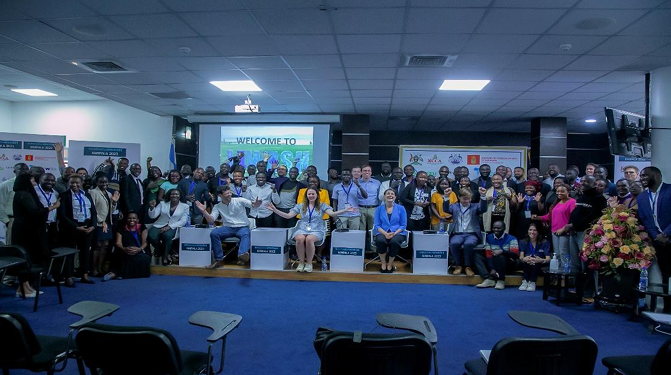 Innovate4WASH (I4WASH) is East Africa’s leading Water, Sanitation, and Hygiene (WASH) marketplace, uniquely positioned at the intersection of innovation, private sector engagement, and sustainable financing. I4WASH emphasizes practical scaling of solutions, commercialization, and investment readiness addressing persistent gaps in technology adoption, financing mobilization, and climate integration in the WASH sector. The I4WASH Marketplace Forum 2026 aims to convene key stakeholders across government, private sector, development partners, civil society, academia, and communities to showcase and scale innovative WASH solutions that enhance climate resilience, promote equity, and strengthen interconnections with energy, food security, and environmental sustainability. Building on the success of previous forums which have showcased over 1,000 WASH innovations since 2018 the Forum will accelerate progress toward Sustainable Development Goal (SDG) 6 in Kenya and the wider region while contributing to related SDGs on energy, food, and ecosystems. The Forum is aligned with Kenya’s Vision 2030, the Bottom-Up Economic Transformation Agenda (BETA), and international climate and development frameworks. It will prioritize action-oriented collaboration, investment matchmaking, and policy dialogue to address Kenya’s pressing WASH gaps amid increasing climate vulnerabilities.
BACKGROUND
 Globally, inadequate WASH services remain a major public health concern. According to WHO, suboptimal WASH contributed to approximately 1.4 million deaths in 2019. In Africa, only 35% of the population has access to safely managed water, compared to 79% globally. Sub-Saharan Africa has historically relied on foreign aid to finance development, particularly in critical sectors such as WASH. However, declining and reprioritized external funding has created a significant financing gap for achieving the SDGs. Kenya, despite notable progress in water and sanitation coverage, faces an annual WASH financing gap of approximately 40%, constraining the expansion and sustainability of services amid rapid urbanization and population growth. As donor funding declines, the country must urgently rethink f inancing models, strengthen domestic resource mobilization, and crowd in private-sector investment across the water-energy-food-environment nexus. Additionally, Kenya is classified as water-scarce, with national improved water access estimated at 59–70%, sanitation coverage at only 29–30%, and significant inequities in ASAL counties, informal settlements, and rural areas. Climate change exacerbates these challenges through erratic rainfall, floods, prolonged droughts, and ecosystem degradation, disproportionately affecting women, girls, and vulnerable populations while impacting energy access, agricultural productivity, and environmental health. Poor WASH in healthcare facilities alone has contributed to over 320,000 excess deaths across nine countries, including Kenya.
I4WASH 2026 RATIONALE
Achieving universal, climate-resilient WASH access in Kenya requires:
1. Innovative technologies that respond to climate risks
2. New financing approaches beyond traditional aid
3. Stronger public–private partnerships (PPPs)
4. Policy coherence and institutional innovation
5. Cross sectoral partnerships, beyond water resources and WASH
I4WASH provides a home-grown, market-based platform that connects solution providers with policymakers, financers, and implementers thereby bridging the gap between innovation and impact. The Forum emphasizes efficiency, accountability, and sustainability, positioning domestic solutions and private capital as central drivers of WASH transformation in the region.